Know what to bid, before the auction runs
A data API on Copart and IAAI lots, resolved lot by lot and returned as clean JSON in one consistent shape across both auctions.
Our own service, running in production.
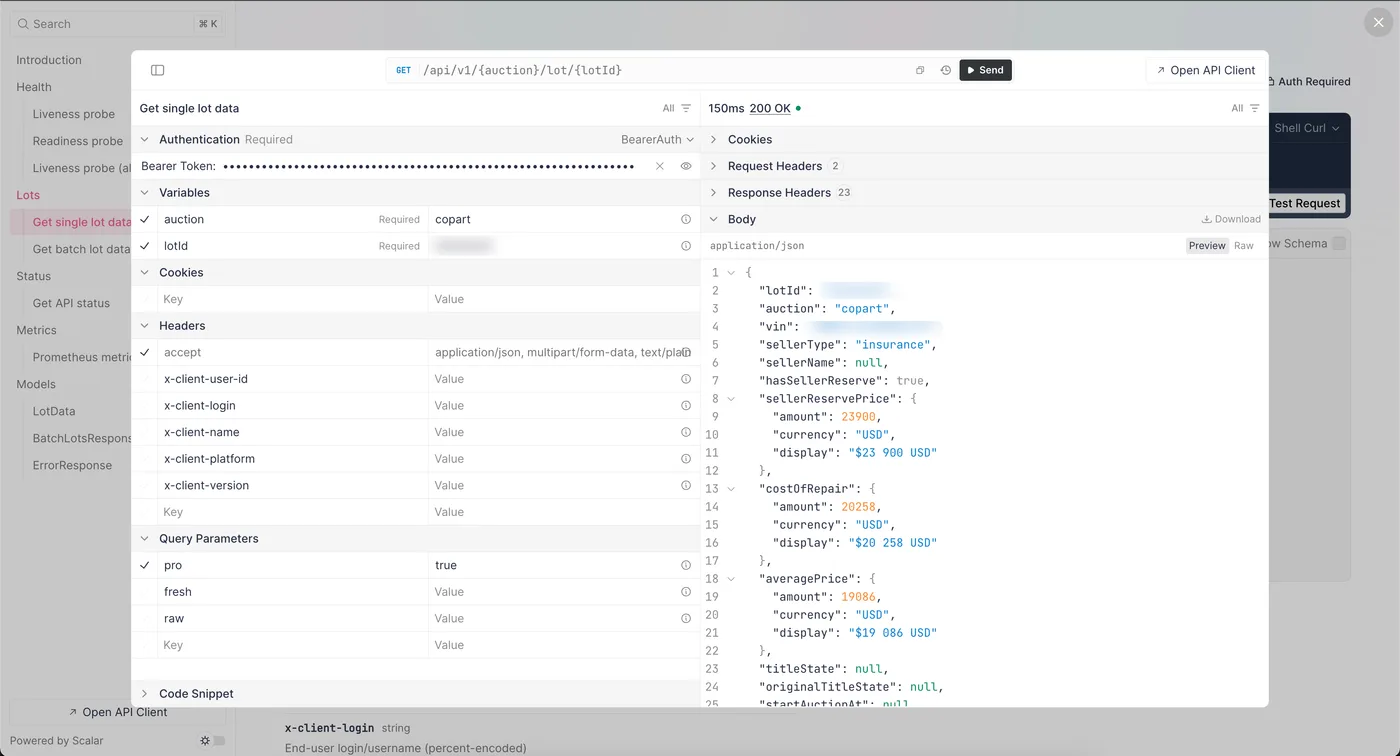
Read the API docsGET /api/v1/iaai/lot/450···31?pro=true
200
- lotId
- 450···31
- vin
- 5UXTR9C5·········
- hasSellerReserve
- true
- sellerReservePrice
- $12 450 USD
- sellerType
- insurance
- sellerName
- ABC Insurance
- costOfRepair
- $14 379 USD
- averagePrice
- $8 885 USD
- startAuctionAt
- 11 Aug, 15:30 UTC
cached trueexpires 5 days after it was fetched
What each field decides
- seller reserve
- The seller’s floor: the number that decides whether you bid.
- seller type
- A dealer and an insurer behave differently after the hammer.
- repair estimate
- Whether the lot is worth the freight, before you commit to it.
- market price
- Your ceiling, set before the bidding rather than after.
- sale history
- An unsold lot returns with a new date. The VIN says it is the same car, and the last price is one the seller turned down.
Where it sits in your stack
The same card comes back for either auction, so your integration does not branch. Where a field does not exist for a lot, it comes back absent rather than guessed.
Values are resolved lot by lot at the moment you ask for them, not read off a copy someone stored last week.
Built to be integrated
Batch
Up to 100 lots in one request, each with its own outcome. One bad id does not fail the call.
Freshness
Every card says whether it came from cache and when that copy expires, so nothing on your side hard-codes a lifetime.
Coalescing
Concurrent calls for the same lot trigger one upstream fetch, not five.
Auth
Token auth with instant rotation, so a leaked key is revoked rather than lived with.
Contract
Full OpenAPI 3.0, so your team generates a typed client instead of reading prose.
Operability
Rate-limit headers, health probes and metrics.
You can hold a key to this one this week
The documentation is public, the spec is machine-readable, and a test key is a message away. Point it at five of your own lots and see what comes back.